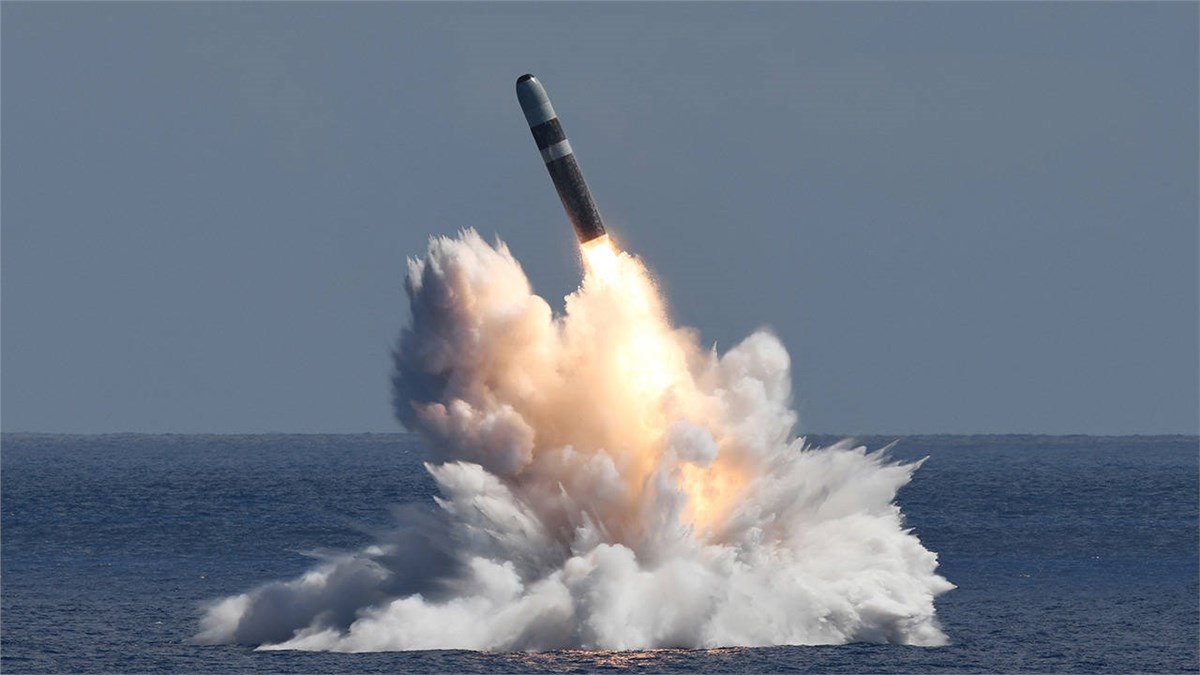
General Dynamics Mission Systems announced today that it was awarded a cost-plus-incentive-fee and cost-plus-fixed-fee follow-on contract with an initial order value of $255 million as the prime integrator for the Trident II Fire Control System (FCS). Under the fiscal year 2026 FCS omnibus contract, General Dynamics will continue to provide full life cycle and operational support for all deployed Ohio-class ballistic missile submarine (SSBN) FCSs, as well as continue the development, production and installation for all new Columbia-class SSBN FCSs through 2032. The contract, awarded in January, includes options which, if exercised, would bring the cumulative value to $740 million.
General Dynamics Mission Systems supports the Navy’s shipbuilding priority with FCS development, production, sparing and installation activities for three Columbia-class hulls along with additional labs and trainers kits. Continuous development for the Trident II D5 Life Extension 2 (D5LE2) FCS will occur under this contract, as well.
“General Dynamics Mission Systems has been a trusted provider of highly reliable fire control systems to the U.S. submarine force for more than seven decades. We remain committed to delivering highly reliable state-of-the-art, innovative solutions to the U.S. Navy. Supporting the strategic deterrent mission is a responsibility we take seriously, and we are dedicated to continuing our track record of on-time, on-budget delivery,” said Laura Hooks, vice president and general manager of Maritime and Strategic Systems at General Dynamics Mission Systems.

Market forecast by Regions, Types, Guidance systems, and Launch Platforms. Country Analysis, Market and Technology Overview, Critical Raw Materials, Opportunity Analysis, and Leading Company Profiles
Download free sample pages More informationWork will be performed in Pittsfield, Massachusetts (87%); Bangor, Washington (1%); Kings Bay, Georgia (1%); Loanhead, Midlothian, United Kingdom (4%); Cape Canaveral, Florida (3%); Groton, Connecticut (3%); and Quonset Point, Rhode Island (2%). If all options are exercised, work will continue until December 2032.