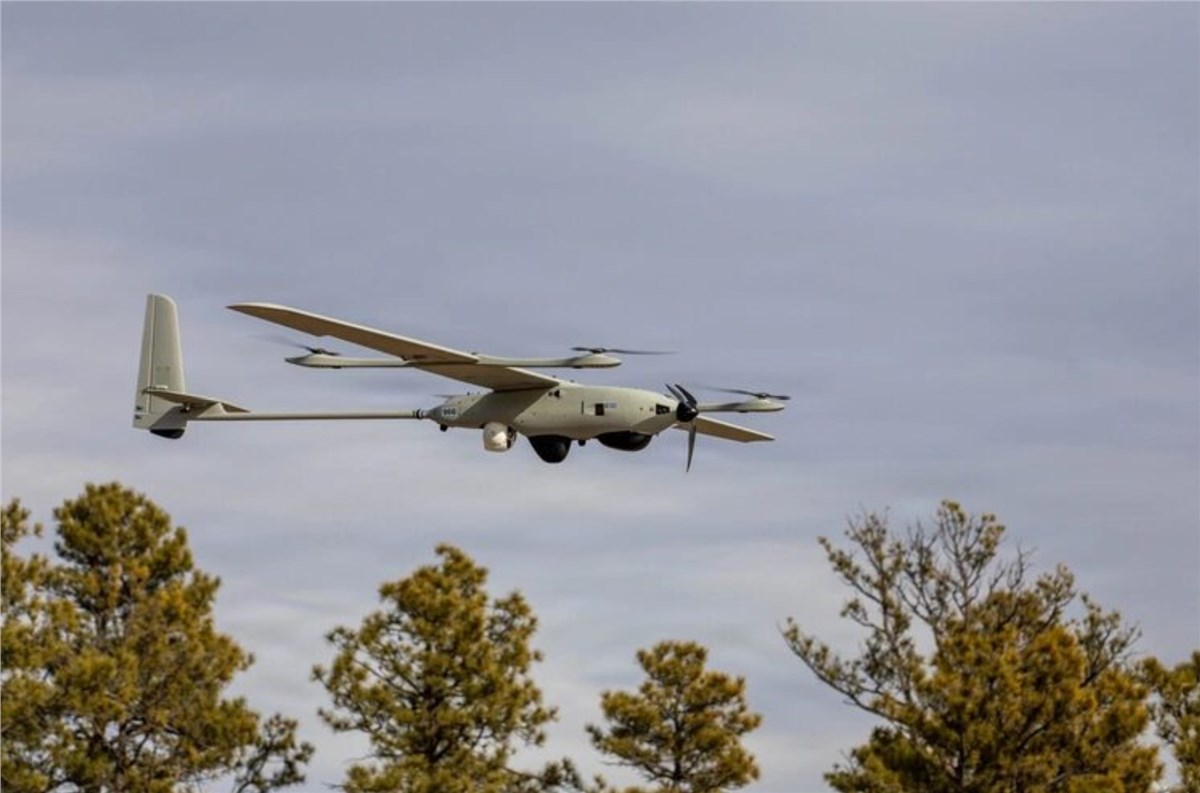
The Redwire Stalker UAS has established itself as a key component of Army programs, from training soldiers at the U.S. Army Aviation Center of Excellence (USAACE) to the Long-Range Reconnaissance (LRR) contract for enhanced surveillance and target acquisition, the Stalker is a combat-proven system that has enabled multiple missions around the world.
Built with a Modular Open Systems Approach (MOSA), Stalker’s ability to quickly and efficiently integrate into multiple systems was on display at the U.S. Army’s recent Ivy Sting IV exercise with the 4th Infantry Division at Fort Carson, Colorado. Redwire’s Stalker UAS, a modular Group 2 Uncrewed Aircraft System (UAS), demonstrated its ease of integration with the Army’s Next Generation Command and Control (NGC2) tactical network. It didn’t just fly, it populated the network as a native, discoverable node, delivering real-time position location information and full motion video across the entire NGC2 ecosystem.
NGC2 integration is a centerpiece of the Ivy Sting exercise series and showcases the Stalker’s seamless integration with any network system. The NGC2 network recognized the Stalker asset the moment it entered the mesh, requiring minimum manual configuration. Redwire’s anticipation of the Army’s transition to NGC2 as a replacement for legacy systems allows the Redwire team to proactively support this vital customer in achieving the Pentagon’s top communications priority: increased data through a fully encrypted network that will empower leaders to make crucial decisions with faster, secure intelligence.

Market forecast by Region, Class, Type, and End-User. Country Analysis, Market and Technology Overview. Opportunities Analysis, and Leading Company Profiles
Download free sample pages More information“As the only fixed-wing VTOL to support this exercise, the Stalker’s deployment at Ivy Sting demonstrates how the aircraft’s modularity results in ease of integration with multiple Army networks,” says Joshua Stinson, Chief Growth Officer at Redwire Defense Tech. “The Stalker’s endurance, advanced capabilities, and maturity allow it to fulfill brigade level tasks normally covered by Group 3 aircraft—but with a much smaller logistics footprint.”
Redwire’s Flight Operations team has been a part of the entire Ivy Sting series of exercises, working with over 6,000 4th Infantry Division soldiers over the course of several months. During Ivy Sting IV, Stalker populated directly into a Stryker Infantry Carrier Vehicle to demonstrate its intelligence, surveillance, and reconnaissance (ISR) capabilities, which include providing immediate battle damage assessment through full-motion video.
During the exercise, the Stalker did not simply fly as a standalone sensor; it was a fully integrated node on the NGC2 mesh. By leveraging open-architecture waveforms, Stalker functioned as more than a sensor; it became a routing node. This allowed the UAS to extend the network’s reach to the tactical edge, ensuring that vital reconnaissance data flowed seamlessly to any authorized user on the Integrated Tactical Network. This advanced integration allows data to flow directly into the Artillery Execution Suite, enabling 4th Infantry Division’s DIVARTY (Division Artillery) to process fire missions and assess targets significantly faster than legacy systems.
Incorporating NGC2 supports the Pentagon’s Joint All-Domain Command and Control (JADC2) vision to move beyond traditional siloed systems by linking sensors and weapons across all military domains into a single, secure network that enables commanders to achieve decision superiority via fast, secure data. Eliminating the bottlenecks of legacy systems and increasing interoperability will result in a clearer, more unified picture of the battlefield that advances mission success and protects human lives.
As the Army moves toward Project Convergence-Capstone 6, this level of “plug-and-fight” integration will be the benchmark for the future of the networked battlefield. Redwire is proud to support the 4th Infantry Division in making the data-centric vision a reality for the modern warfighter.