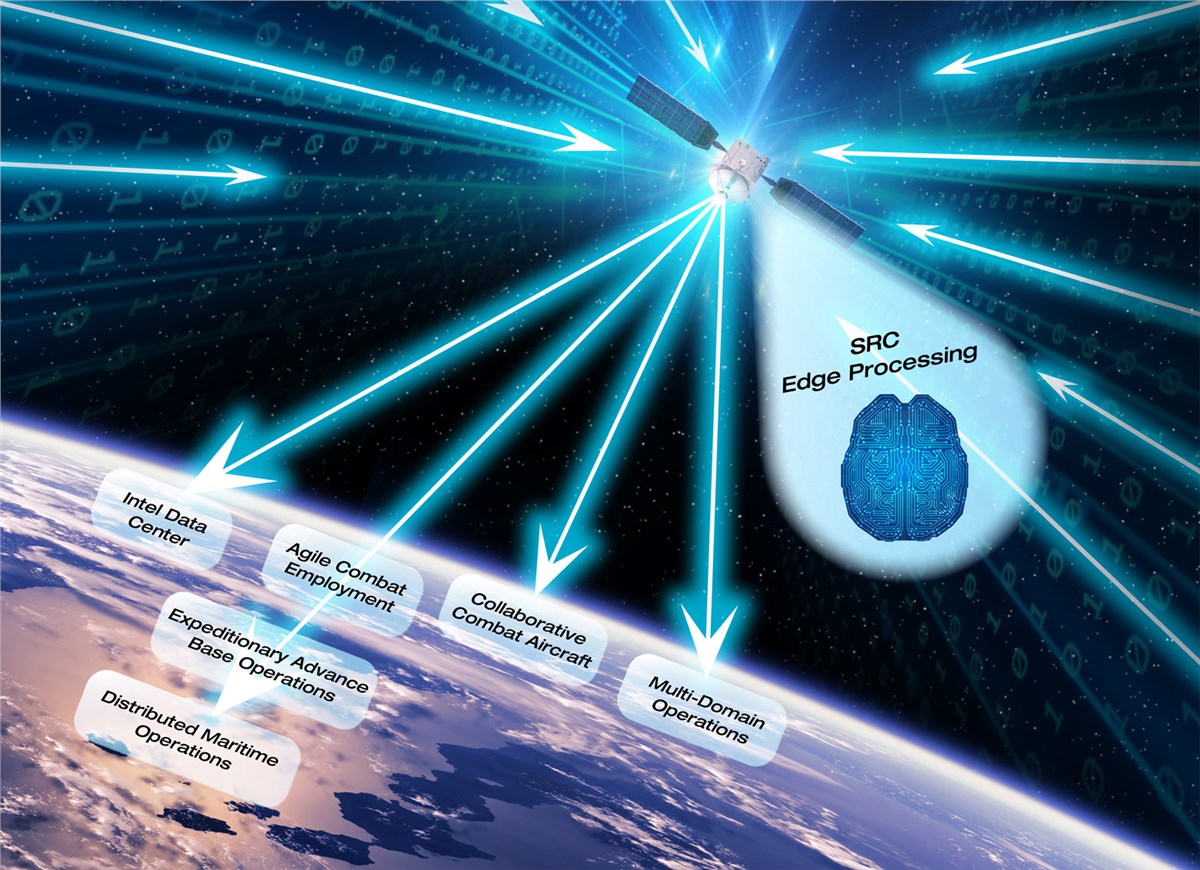
SRC, Inc. ("SRC" or "Company"), a not-for-profit defense research and development company, has been awarded a $24M contract by the Air Force Research Laboratory (AFRL) to develop next-generation embedded artificial intelligence and machine learning capabilities across ground, air and space domains.
Through the contract, SRC will develop new machine learning algorithms, high-performance embedded computing architectures and ultra-low size, weight and power (SWaP) hardware. This R&D work will empower the military without depending on external networks. These capabilities are designed for missions that include on-board data processing, situational awareness and information analysis.
The effort focuses on advancing "edge processing," the ability to parse large amounts of data and run complex algorithms directly on-board a platform instead of relying on distant data centers. As the Air Force shifts toward distributed and attritable systems operating in highly contested environments, the ability to sense, process and make decisions on-board has become essential. SRC's work aims to significantly accelerate data processing.
Market forecasts by Region, by Technology, Application, Operation, Platforms, and by End-User. Technology and Market Overview, Events based Forecast, Opportunity Analysis, and Leading Companies Profiles
Download free sample pages More information"We're proud to continue our collaboration with AFRL as we advance the next generation of embedded at-the-edge computing," said Kevin Hair, president and CEO of SRC, Inc. "These advancements will strengthen operational effectiveness and provide greater agility and precision in rapidly evolving environments."
The effort builds on SRC's decades-long collaboration with AFRL, including early access to next-generation, low-power processors. As part of the research, SRC will also explore new ways to rapidly train and field machine learning models in dynamic threat environments. This includes techniques to minimize the amount of data needed to produce reliable algorithms and to quickly retrain models as conditions change. Faster algorithm development improves responsiveness across missions requiring real-time detection, classification and threat assessment in contested environments where communication links may be jammed or degraded.