MBDA, Lockheed Martin, and the F-35 Joint Program Office recently completed a series of critical ground-based integration tests with METEOR and F-35A, bringing the pair closer to operational readiness.
METEOR – the beyond visual range air-to-air missile – is the result of a six-nation cooperation program involving the UK, Italy, France, Germany, Spain, and Sweden. Since its entry into service, it has been integrated onto a variety of platforms.
This test success is the latest step towards enabling METEOR’s capability on F-35. While the UK is leading the integration campaign for F-35B, Italy is sponsoring integration onto the F-35A model.
As a network-enabled capability, met through weapons data link communication, integrating METEOR onto a fifth-generation platform like F-35 enables its air crew to have the most flexible weapon system and take advantage of both the weapon system and platforms capabilities.

Market forecast by Regions, Types, Guidance systems, and Launch Platforms. Country Analysis, Market and Technology Overview, Critical Raw Materials, Opportunity Analysis, and Leading Company Profiles
Download free sample pages More informationA pivotal step
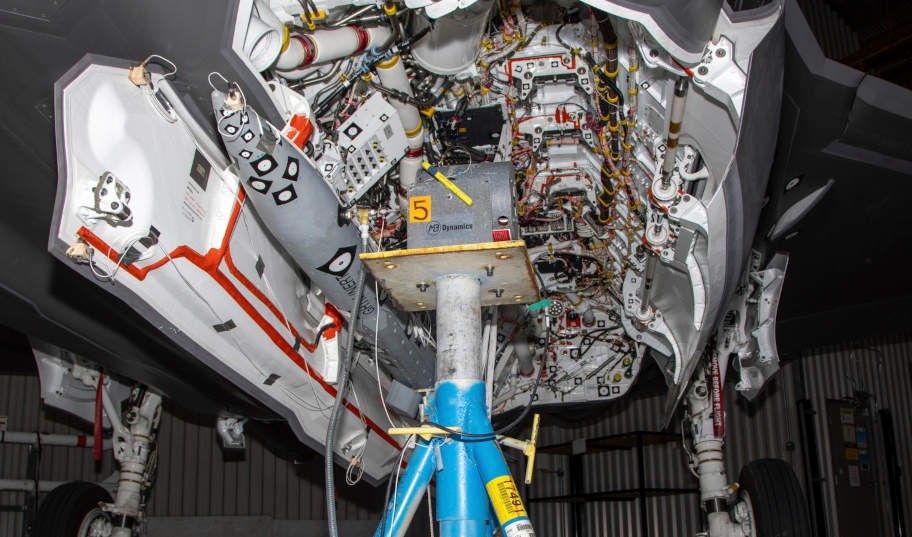
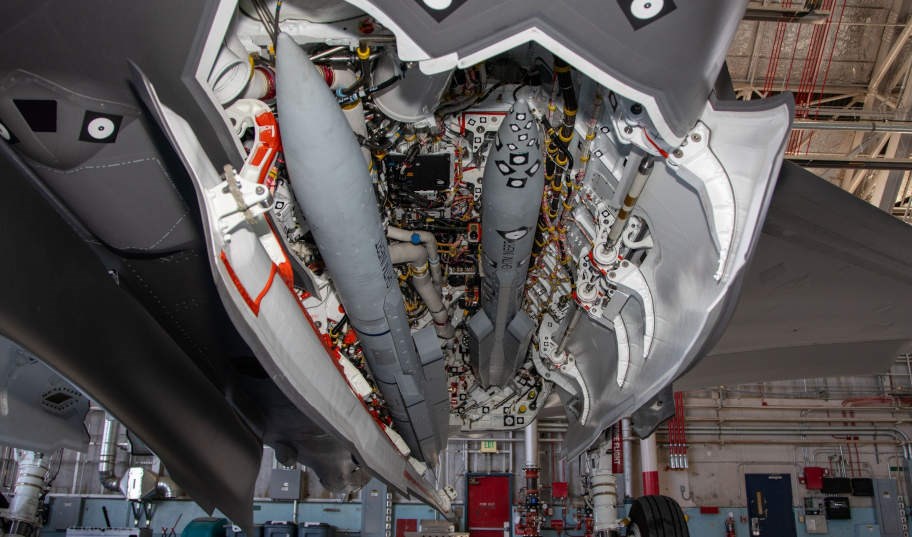
Conducted at Edwards Air Force Base, California, the ground vibration testing and fit checks validated key hardware responses between the 5th Generation fighter aircraft and missile — a pivotal step before airborne tests begin. Engineers meticulously evaluated the data collected from the trials to confirm the safe stowage and deployment of the missile from the F-35A’s internal weapons bay, preserving the aircraft’s valuable stealth profile.
Next steps
One ground test remains before clearance to start flight testing, bringing the METEOR missile and the F35A one step closer to operational capability. These recent tests follow the Royal Air Force’s announcement earlier this year of successful METEOR flight tests on an F-35B. The F-35’s sensor suite, coupled with METEOR’s kinematics, will give operators the operational advantage they expect from their choice of weapon system.
Redefining combat air in the 21st century
MBDA developed METEOR to meet the needs of six partner nations. These nations shared a common requirement: to counter present and future aerial threats. MBDA delivered this by developing a missile with a ‘No Escape Zone’ significantly larger than that of any comparable system. Meaning that once METEOR is in flight, the threat it is defending against has far fewer options to evade it.
At the heart of this advanced capability is METEOR’s ramjet propulsion, which uses a solid-fuel, variable-flow ducted rocket design. Unlike traditional missiles that rely on an initial boost and then coast unpowered, METEOR’s ramjet delivers sustained thrust right up until intercepting a threat.
Interception is aided by an active radar seeker for terminal guidance, and supported by inertial mid-course navigation augmented by a two-way data link. This datalink enables target updates or mid-flight retargeting. When a threat inevitably fails to escape, METEOR’s blast-fragmentation warhead neutralizes it. Dual fusing - impact and proximity - maximizes the warhead’s effectiveness.
METEOR redefines air combat in the 21st century, and is already in active service with the partner nations for which it was built, and is integrated onto their frontline platforms; Saab Gripen, Eurofighter Typhoon, Dassault Rafale. In addition to the integration onto the F-35 Lightning II underway, South Korea has also begun testing the missile for deployment on the KF-21 Boramae.