Collins Aerospace, an RTX (NYSE: RTX) business, announces the successful completion of the HECATE project, part of the European Union's Clean Aviation Joint Undertaking with support from UK Research and Innovation. This initiative achieved Technology Readiness Level 5, or TRL5, successfully proving the electrical architecture design for future hybrid-electric aircraft performance in real-world conditions.
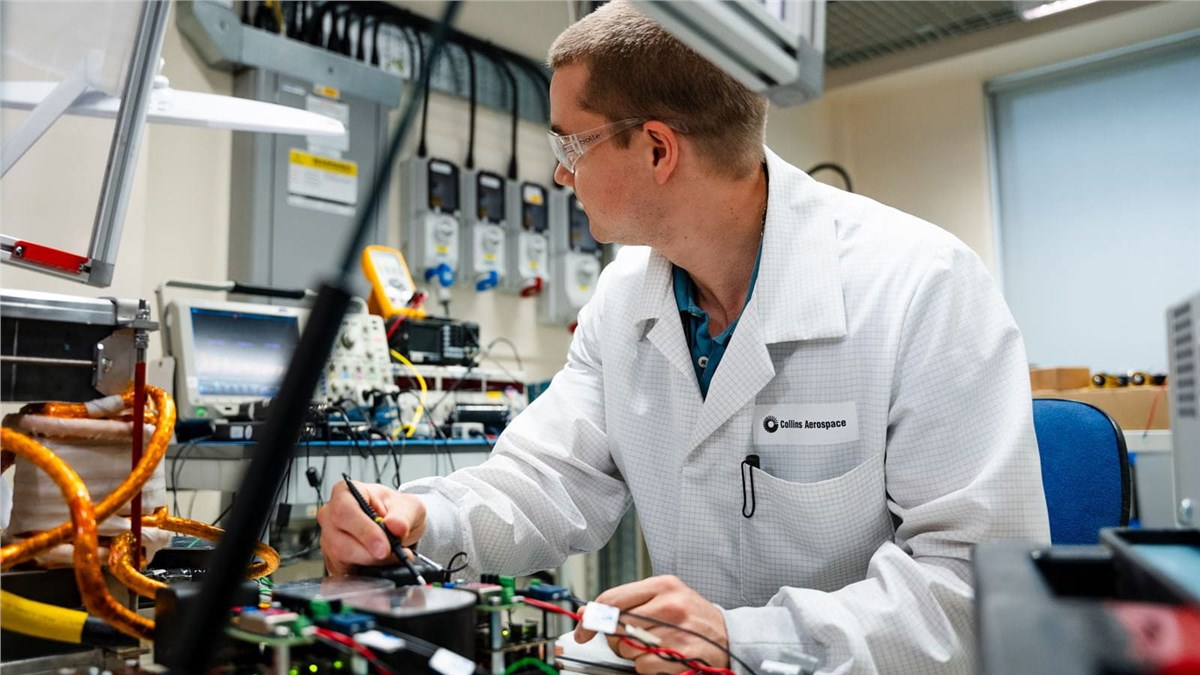
The Hybrid-ElectriC regional Aircraft distribution TEchnologies project, or HECATE, reached this significant milestone in late 2025 after completing testing, verification and validation of its Electrical Power Generation and Distribution System. A hybrid-electric system producing more than 500 kilowatts of power was tested using the Copper Bird platform of Safran Electrical & Power based in Niort, France. This platform is used to simulate and test advanced electrical systems in a controlled environment.
“Through successful collaboration with HECATE consortium partners, we have advanced critical technologies for hybrid-electric propulsion and more electric aircraft to meet future high power, high-voltage aircraft demands,” said Kristin Smith, vice president of Electric Power Systems at Collins Aerospace. “With efficient, lightweight, and compact electrical power distribution technologies, Collins is well-positioned for continued maturation and integration testing under Clean Aviation Phase 2 programs, moving closer to commercial viability.”

The HECATE consortium is comprised of multiple European aerospace industry partners, including Collins Aerospace, Safran, Airbus Defence and Space, Leonardo and several universities. Collins, through its Applied Research & Technology organization and Power & Controls business, leads the project's steering committee, while Safran Electrical & Power serves as technical coordinator.
“We are very proud to have integrated the full suite of partner systems from the HECATE consortium into our state-of-the-art electrical systems test bench in Niort,” said Agnès Pronost-Gilles, executive vice president & general manager for Power Division, Safran Electrical & Power. “This integration highlights the strength of our collaboration and our technical leadership in hybrid-electric and electric propulsion. Safran Electrical & Power is now well-positioned to meet the growing demands for sustainable regional aircraft and to lead the next steps in innovation through Phase 2 of the Clean Aviation Project.”
“Hybrid-electric aircrafts need reliable and powerful electrical architectures to safely fly our skies – and HECATE has brought us a decisive step closer towards this goal with tangible results and win-win collaboration with EASA,” said María Calvo, head of Unit Project Management at Clean Aviation. “The project was jointly developed by 38 participating entities from 11 European countries, proof of the innovative power of European cooperation. At Clean Aviation, we will be excited to see how Phase 2 projects build on HECATE achievements and will further mature the technology for an entry into service by 2035.”
The Phase 1 CAJU project used digital twin technology to simulate real-world operations, which significantly reduced testing time while ensuring the system adhered to strict electromagnetic compatibility standards. This enabled safe operation without interference from or with other devices, even in the presence of external electromagnetic fields.
The completion of HECATE marks a key milestone for advancing Clean Aviation Phase 2 projects like OSYRYS and LEIA. OSYRYS, led by Safran Electrical & Power, focuses on developing and testing electrical systems for hybrid-electric regional aircraft. LEIA, led by Airbus, aims to integrate and test hybrid-electric architecture in a lab environment to prepare for new short-medium range aircraft entry into service by 2035. These projects build on the successful collaboration between Airbus, Safran and Collins to drive hybrid-electric aviation forward.