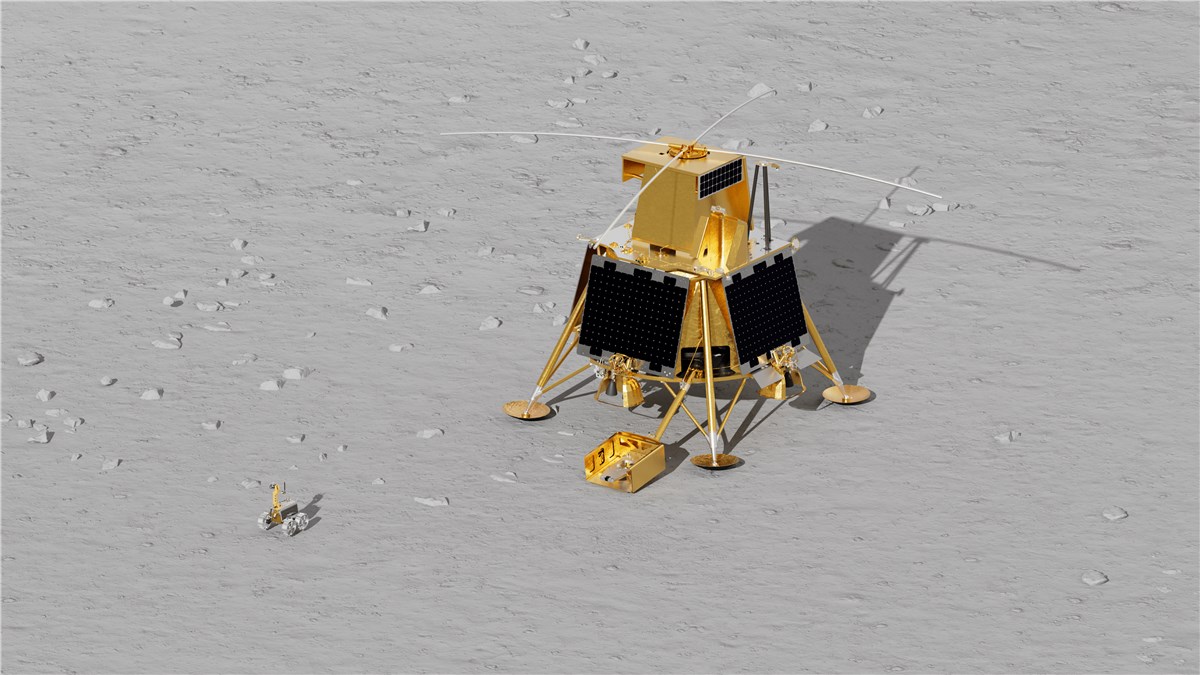
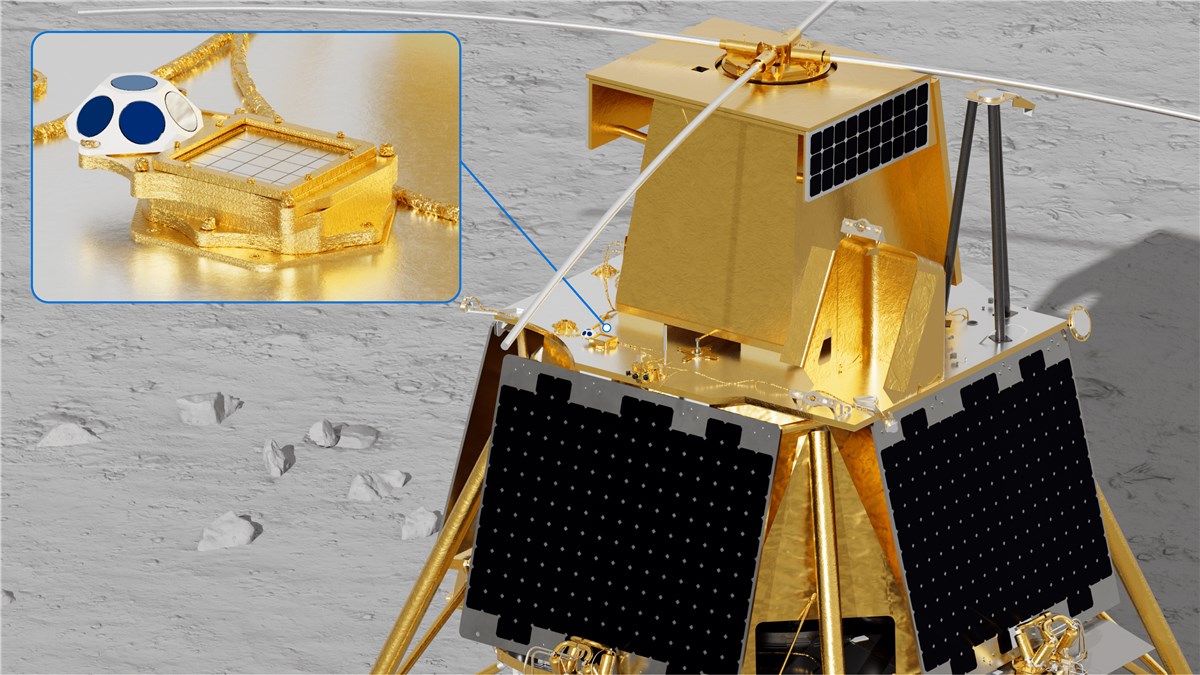
Firefly Aerospace (Nasdaq: FLY), a market leading space and defense technology company, today announced a new commercial payload agreement with Volta Space Technologies to host a wireless power receiver on Firefly’s Blue Ghost Mission 2 lander on the far side of the Moon. The payload will serve as a technology demonstration for Volta’s planned lunar power network, called LightGrid.
“Firefly is proud to welcome Volta to our second Blue Ghost mission and serve as a core partner in the ongoing development of lunar power utilities,” said Jason Kim, CEO of Firefly Aerospace. “Our international mission will enable critical technology demonstrations that lay the groundwork for lasting operations on the Moon. Longer term, our Blue Ghost landers and Elytra orbiters are well equipped to support Volta’s larger vision for a lunar power network, and we look forward to seeing the evolution of our collaboration in the years ahead.”
Volta’s planned LightGrid consists of a network of satellites in lunar orbit that collect solar energy and transmit it via laser to receivers known as LightPorts that are integrated on customer landers, rovers, and infrastructure on the Moon’s surface. The Volta payload hosted on Blue Ghost Mission 2 will be used to test and validate the first LightPort, demonstrating how surface users can tap into Volta’s power grid. The mission will further demonstrate how Volta’s dedicated laser-receiver system can be integrated into centralized surface power generation architectures to enable local surface-to-surface power distribution and provide redundant power capabilities as the lunar ecosystem develops.

by Laser Type (Semiconductor Diode, Fiber, Solid-state), Data Rate (< 2.5, 2.5-10, > 10 GBPs), Platform, Application, Component and Region
Download free sample pages“Partnering with Firefly on Blue Ghost Mission 2 is an important step forward for Volta and the future of lunar infrastructure,” said Justin Zipkin, CEO of Volta. “This collaboration allows us to prove our LightPort receiver in a real lunar environment and move one step closer to delivering a fully integrated power grid for the Moon.”
With the addition of Volta based in Montreal, Canada, Blue Ghost Mission 2 will now carry six payloads from five different countries. Other payloads flying on Firefly’s mission include NASA’s LuSEE-Night radio telescope and User Terminal and the European Space Agency’s Lunar Pathfinder satellite as part of Firefly’s NASA Commercial Lunar Payload Services task order. Firefly also onboarded additional government and commercial payloads, including the United Arab Emirates Mohammed Bin Rashid Space Centre Rashid Rover 2 and Fleet Space Technologies’ SPIDER payload. These payloads aim to provide insights into the geological properties and minerals on the Moon, enhance lunar surface mobility, improve lunar communications, and uncover new insights about the origins of the universe.
Blue Ghost Mission 2 will also initiate Firefly’s Ocula lunar imaging service through Firefly’s Elytra Dark vehicle that is equipped with high-resolution telescopes. Elytra will first serve as a Blue Ghost transfer vehicle and communications relay for the mission and then remain operational in lunar orbit for more than five years to provide ultraviolet and visible spectrum imaging – a key capability to identify mineral deposits on the Moon’s surface, map future landing sites with higher fidelity, and enable cislunar situational awareness.
Qualification testing for the fully stacked Blue Ghost and Elytra spacecraft structure is well underway for Blue Ghost Mission 2. The team has also begun assembling flight hardware and has accepted and tested a majority of the payloads at Firefly’s spacecraft facility.

London, United Kingdom
May 5 - 7, 2026