
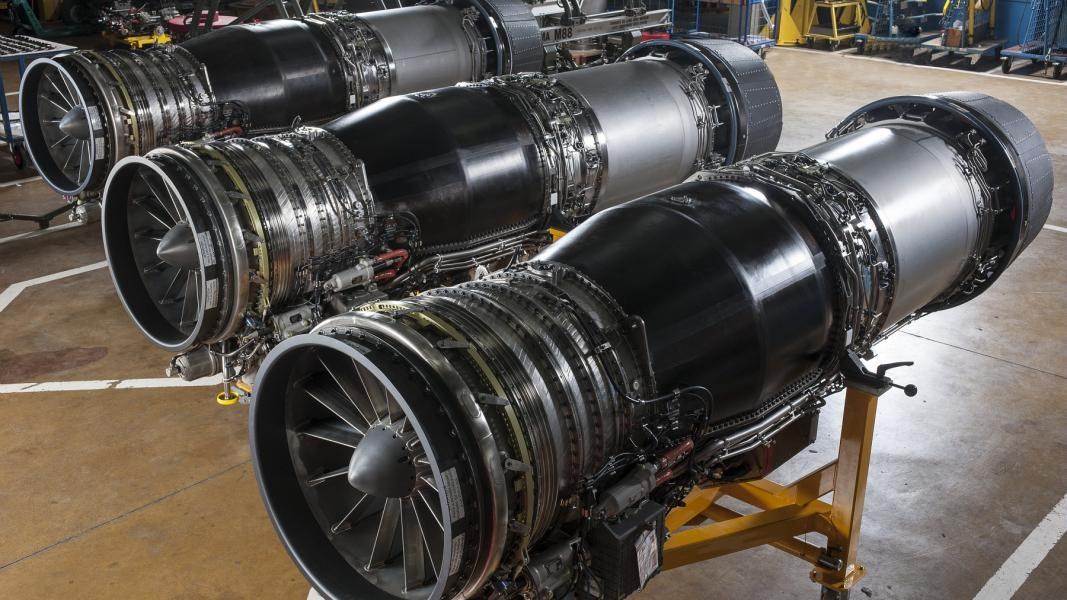
Safran Aircraft Engines has announced a project to expand its Le Creusot facility, which specializes in machining complex rotating parts.
Today, the Le Creusot site exclusively produces low-pressure turbine disks for CFM International’s1 LEAP and CFM56 engines, which power Airbus A320 and Boeing 737 aircraft. This expansion will add production lines for complex rotating parts for the M88 and GE90 engines, which power the Rafale fighter jet and Boeing 777 widebody airliner, respectively. The project represents a €70 million investment and will increase the workforce at the site from 200 to 300 people by 2032. Scheduled to be operational in 2029, the 9,000 sq.m (96,875 sq ft) expansion will bring total industrial floorspace to 26,000 sq.m (279,861 sq. ft).
With this expansion, the Le Creusot site will become the second production source for M88 complex rotating parts, alongside the Évry-Corbeil facility, supporting business continuity and a significant ramp-up in M88 engine deliveries. Machining operations for these parts will begin at the existing Le Creusot’s facility in 2026, before being transferred to the expanded area.
“We’re proud to announce the expansion of our Le Creusot site, which reflects our ambition to strengthen our internal supply chain to support growth in our business,” said Claude Quillien, Vice President, Industrial Operations and Supply Chain at Safran Aircraft Engines. “This project will help reinforce industrial and technological sovereignty while meeting the needs of our civil and military customers.”
A flagship industrial site for Safran, the facility meets the highest Industry 4.0 standards, with integrated digital processes, connected and automated production management, and unique expertise in production engineering and quality control. This translates into outstanding industrial performance on the LEAP program, a high degree of autonomy in machining processes and flexible, resilient production. Many operations are carried out using closed-door machining, a production approach in which a network of automated machining centers runs continuously without human intervention, including overnight.