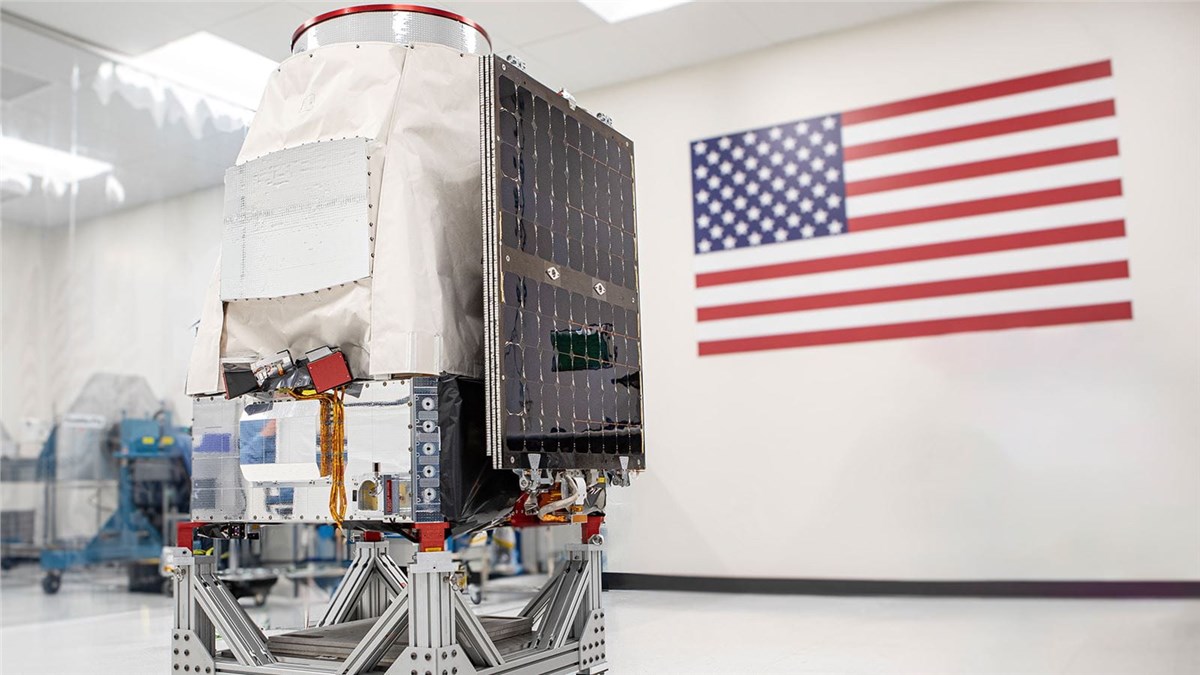
A Saturn-200 minisatellite, developed by Blue Canyon Technologies—RTX's (NYSE: RTX) small satellite manufacturer and mission services provider—successfully launched this week in support of NASA's Pandora mission. The mission is designed to study the atmospheres of exoplanets, or worlds beyond our solar system, as well as the activity of their host stars.
The Pandora mission aims to conduct an in-depth study of at least 20 planets by observing transits: events where a planet passes in front of its host star, causing a temporary dimming of the star's light. During these transits, the planet's atmosphere absorbs and scatters portions of the starlight. By analyzing these effects, astronomers can determine the planet's atmospheric composition and assess its potential to support life. Pandora will focus on detecting planets with atmospheres primarily composed of hydrogen or water.
"Pandora features the largest telescope payload ever integrated onto a Blue Canyon spacecraft," said Chris Winslett, general manager of Blue Canyon Technologies. "Our Saturn-class platform, equipped with advanced guidance, navigation, and control systems, will provide the precision pointing and stability critical to the success of this important mission."

Market forecast by Region, Type, Application, and End-User. Country Analysis, Market and Technology Overview including Critical Raw Materials, Opportunity Analysis, and Leading Company Profiles
Download free sample pages More informationPandora is a NASA Science Mission Directorate program led by NASA's Goddard Space Flight Center and managed by Lawrence Livermore National Laboratory. In addition to the bus platform, Blue Canyon also provided launch vehicle integration and post-launch bus commissioning.
Pandora's successful launch brings Blue Canyon's total number of spacecraft launched to 87 units.

London, United Kingdom
May 5 - 7, 2026