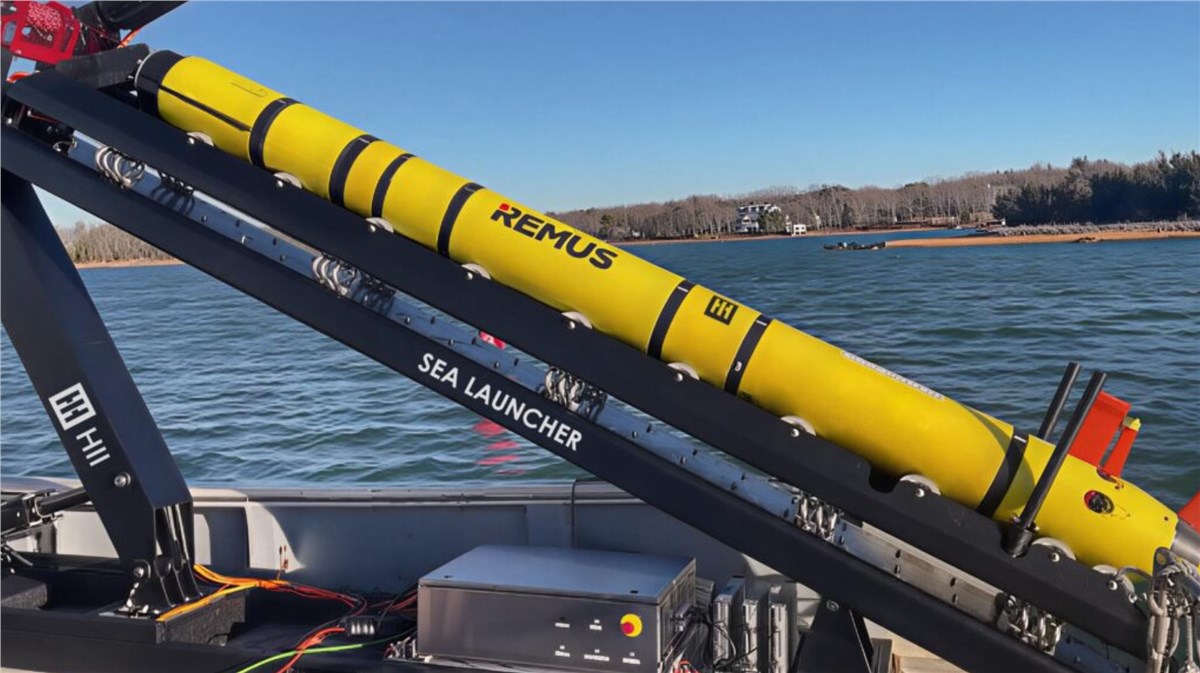
HII (NYSE: HII), the world’s leading manufacturer of autonomous underwater unmanned vehicles, announced today the successful shipboard deployment and recovery of a REMUS autonomous underwater vehicle (UUV) using the company’s automated launch and recovery system, Sea Launcher.
The demonstration represents a key milestone in advancing operationally proven manned-unmanned teaming for maritime missions and highlights HII’s ability to integrate mature automation and autonomy into ship-ready systems, including the HII ROMULUS family of unmanned surface vessels (USVs) currently in production.
During recent testing, HII validated key aspects of system performance to support a fully autonomous, end-to-end launch and recovery sequence. The test used a representative vehicle configured for real-world mission conditions and mirrored a recovery procedure that has been proven in deployments repeatedly across U.S. Navy and allied operations.
Market forecast by Region, Size, Operation Type, and Lifecycle Phase. Country Analysis, Market and Technology Overview, Critical Raw Materials, Opportunity Analysis, and Leading Company Profiles
Download free sample pages More informationAutomated launch and recovery significantly reduces risk to sailors, expands mission range and flexibility, and shortens mission timelines. These advantages are particularly important in contested or high-sea-state environments, where minimizing hands-on deck operations improves safety and operational availability.
“This is proven technology applied in a highly relevant shipboard configuration,” said Duane Fotheringham, president of Mission Technologies’ Unmanned Systems business group. “REMUS has successfully performed autonomous line capture and recovery for years. What this demonstration shows is how seamlessly that capability integrates with automated launch and recovery systems onboard manned or unmanned vessels to support modern maritime operations.”
REMUS is one of the most widely deployed autonomous underwater vehicle families in the world, trusted by more than 30 navies for missions including mine countermeasures, undersea survey, intelligence collection, and environmental sensing. Its modular design and open architecture allow it to operate independently or as part of a distributed maritime force, teaming with crewed ships, unmanned surface vessels, and other undersea platforms.
“This demonstration reinforces the value of REMUS within a distributed maritime operating model,” Fotheringham added. “Whether operating alongside manned platforms or coordinating with other unmanned systems, REMUS provides commanders with a reliable and flexible capability they already know and trust.”
Looking ahead, HII plans to continue integrating REMUS with its new ROMULUS unmanned surface vessel (USV) family, as well as a range of manned and unmanned ships, to support evolving customer requirements across U.S. and allied navies.