
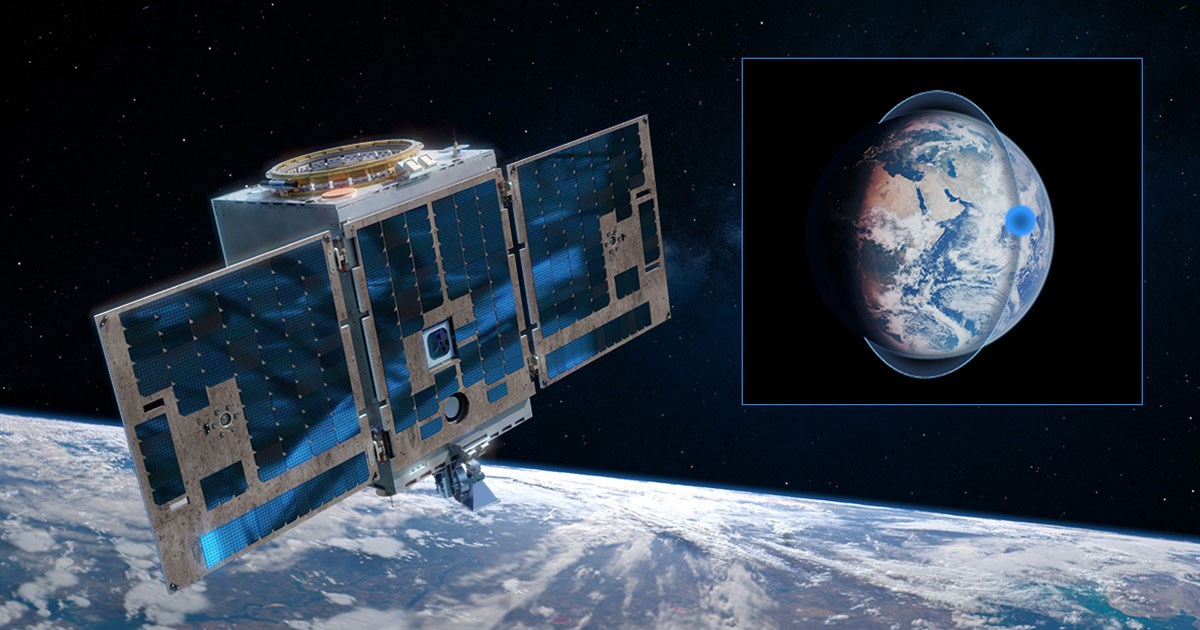
General Atomics Electromagnetic Systems (GA-EMS) has successfully integrated a dual-instrument payload onto a GA-150 satellite for NASA Goddard Space Flight Center’s Total and Spectral Solar Irradiance Sensor-2 (TSIS-2) mission. This milestone extends the decades-long continuous record of solar irradiance, a dataset critical to advancing scientific understanding of how solar variability influences the Earth system and its atmosphere.
GA-EMS designed and manufactured the GA-150 satellite at its Centennial, Colorado facility, where payload integration was completed. The work included performance checkouts and instrument alignment. Building on these milestones, the company has received an Authority to Operate (ATO) under NASA’s risk management framework, underscoring operational readiness. A full spacecraft test will be conducted to verify end-to-end communications and overall system performance going into 2026.
Unlike its predecessor, TSIS-1, which operates aboard the International Space Station, TSIS-2 will fly as a freestanding mission on a dedicated GA-150 satellite. This independent platform will allow TSIS-2 to collect uninterrupted measurements in sun-synchronous orbit, ideal for satellite missions gathering high-quality data to monitor weather, environmental changes, and atmospheric variances from space.
“Integrating the TSIS-2 payload onto the GA-150 is a significant milestone for our team and the mission,” said Scott Forney, president of GA-EMS. “The dedicated GA-150 platform will help ensure NASA receives the high-quality data this mission is designed to deliver.”
The dual-instrument payload, developed under a separate NASA Goddard contract awarded to the University of Colorado Boulder’s Laboratory for Atmospheric and Space Physics (LASP), includes the Total Irradiance Monitor (TIM) and Spectral Irradiance Monitor (SIM). These sensors contribute to continuous and vital long-term data measurements necessary for quantifying the sun’s influence on Earth’s ozone layer, atmospheric circulation, clouds, and ecosystems throughout extensive solar energy cycles.
“Building on the outstanding success of the TSIS-1 mission, which has delivered the most accurate and stable measurements of the total and spectral solar irradiance since its 2017 launch, the TSIS-2 mission will allow our team at LASP to continue to improve this essential continuous solar data record,” said Erik Richard, Ph.D., LASP principal investigator for TSIS-2. “Leveraging LASP’s long-standing leadership in solar irradiance measurements and instrument calibration, and in close partnership with NASA and General Atomics, we are proud to deliver the total and spectral solar irradiance monitors that will extend this irreplaceable time-series with unprecedented accuracy for the global scientific community.”