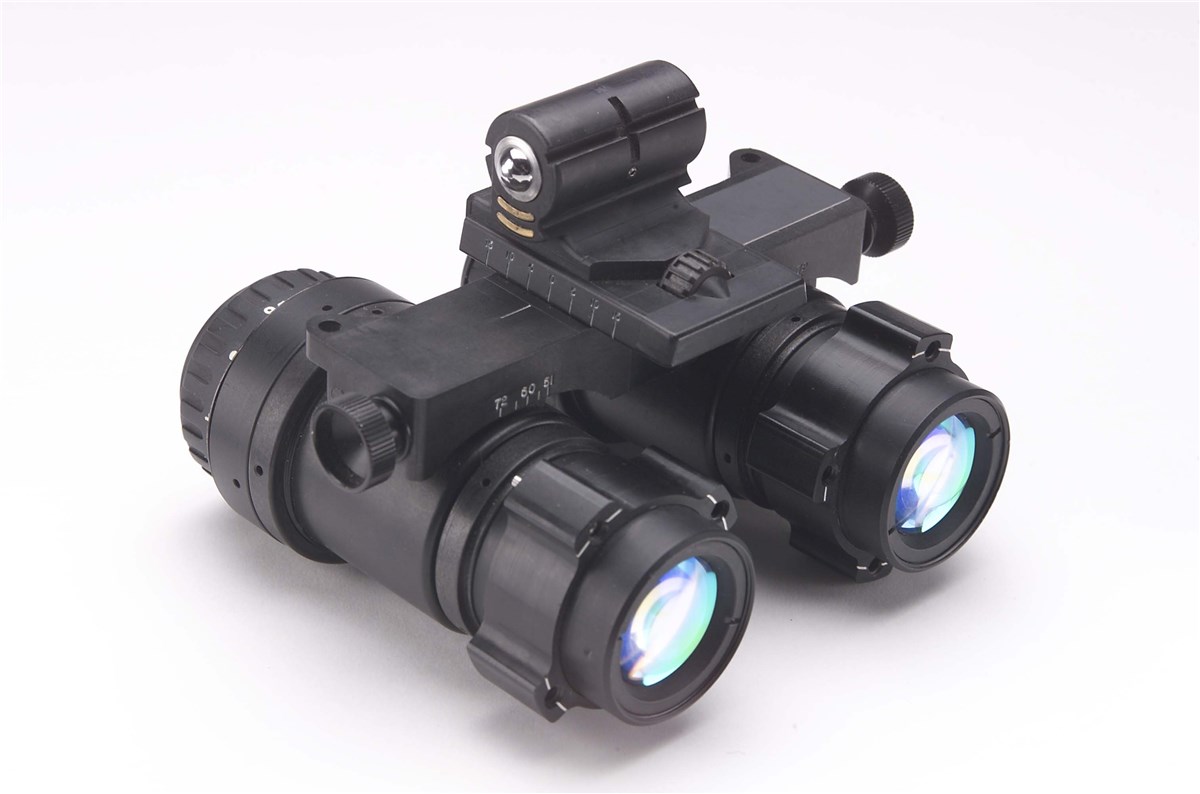
When three staff members from a U.S. research base in Antarctica needed medical care, Elbit America’s night vision technology played a key role in mission success.
The U.S. National Science Foundation sent an emergency evacuation request to the New Zealand Defense Force for three researchers unable to receive necessary care in Antarctica, including one who required urgent treatment. Despite the extreme winter weather conditions, a crew aboard a Royal New Zealand Air Force C-130J Hercules immediately sprang into action.
Although determined safe to fly, mid-winter flights to Antarctica – including landing on the ice – make it one of the most challenging missions air crews perform. The weather is unpredictable and once the aircraft is past a certain point south, there are no airfields available to divert.

Market forecasts by Region and by System with subsegments by: Vision System, Body Protection System, C3 System, Power System, and Weapons. Technology and Market Overview, Impact and Opportunity Analysis, and Leading Companies Profiles
Download free sample pages More informationTo prepare for the flight, the aircraft was pre-positioned in Christchurch, New Zealand. On a chilly Tuesday afternoon, the crew found a solid weather window and made the decision to take off, flying through the pitch-black skies to complete the mission.
With the help of Elbit America's F4949 (AN/AVS-9) aviation night vision goggles, the crew was able to successfully land at McMurdo Station in Antarctica and return to Christchurch successfully. Including the short time on ice, the medical evacuation took nearly 20 hours to complete. One doctor and other medical personnel with the New Zealand Defence Force were onboard to tend to the patients throughout the flight and all three individuals received the care they needed.
“We were thrilled to hear that our F4949 aviator night vision goggles were instrumental in supporting the Royal New Zealand Air Force in their successful rescue operations. This is another example that demonstrates how this critical technology can be deployed outside of traditional defense missions to provide lifesaving support, said Frank Loftus, a regional account manager with Elbit America's Warfighter Systems. "In addition to supplying many night vision goggles to this user group, technicians from the Royal New Zealand Air Force have attended extensive maintenance training in our Roanoke, Virginia facility. These trainings are provided by our Customer Repair Services team. This successful evacuation story demonstrates our collective focus on operational readiness, so the right equipment was fit for flight at just the right time.”
Elbit America is proud to supply the Royal New Zealand Air Force with mission-critical night vision technology. The first F4949 aviation goggles were purchased by the Royal New Zealand Air Force in the early 2000s, with additional purchases over the years.
Why it matters
Night vision technology played a critical role in enabling the air crew to fly safely during night operations in unpredictable, dangerous weather conditions. Their use enhanced situational awareness and navigation, directly contributing to mission success by helping to ensure timely and safe transport of patients in need of medical attention.
About the F4949 night vision goggle
Fixed and rotary-wing aviators gain the advantage with enhanced visual clarity to clearly identify targets and avoid obstacles. This system was first developed in 1992 and is now in service in more than 60 countries, as well as being the standard night-flying system for the U.S. Air Force and Navy.
Arlington, VA
Jul 8 - 9, 2026
Amman, Jordan
Jun 30 - Jul 1, 2026