

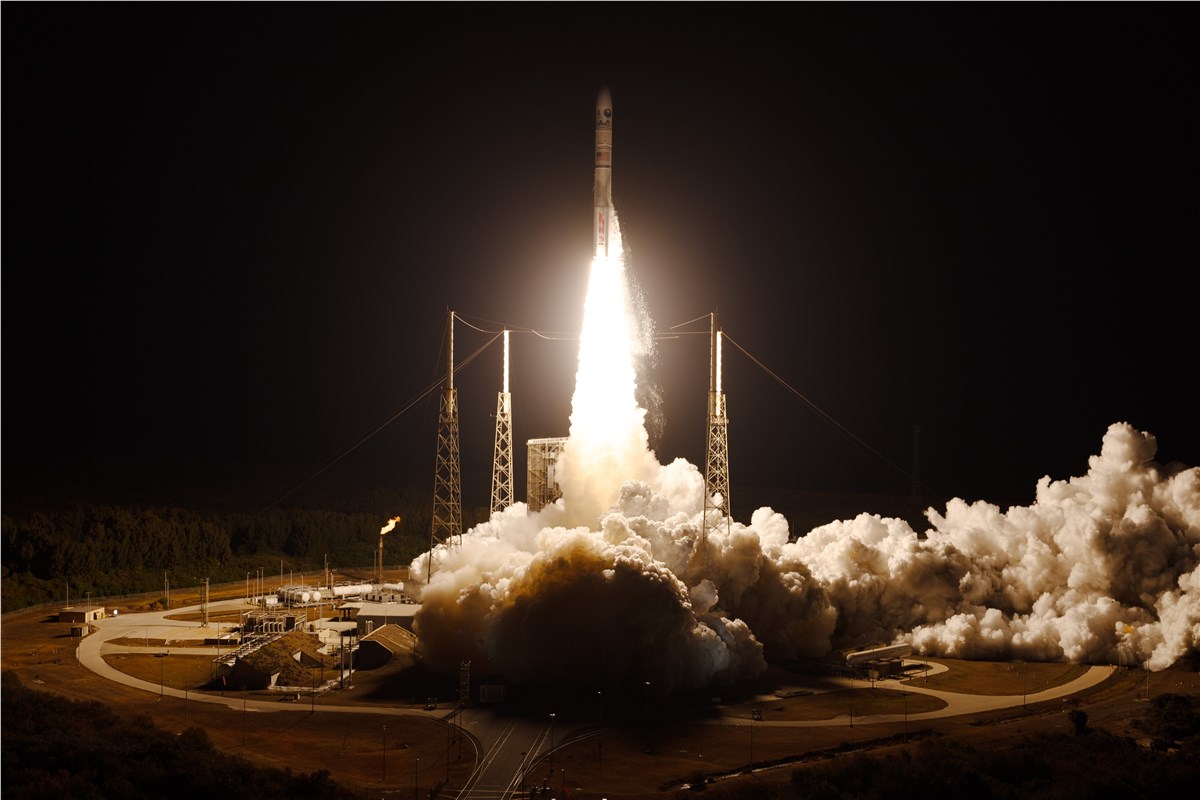
A United Launch Alliance (ULA) Vulcan rocket carrying the USSF-87 mission for the United States Space Force’s Space Systems Command (SSC) lifted off on Feb. 12 at 4:22 a.m. EST from Space Launch Complex-41 at Cape Canaveral Space Force Station.
"Early during flight, the team observed a significant performance anomaly on one of the four solid rocket motors. Despite the observation, the Vulcan booster and Centaur performed nominally and delivered the spacecraft directly to geosynchronous orbit,’ said Gary Wentz, ULA vice president of Atlas and Vulcan Programs. “The integrated U.S. government and contractor team is reviewing the technical data, available imagery, and establishing a recovery team to collect any debris. We will conduct a thorough investigation, identify root cause, and implement any corrective action necessary before the next Vulcan mission.”
ULA has served as the launch backbone for our past national security space missions having successfully launched more than 100 critical missions to orbit for the U.S. Space Force and National Reconnaissance Office since the company’s founding in 2006. This legacy, built on Atlas V, Delta II and Delta IV rockets, continues with the purpose-built, next-generation Vulcan rocket.