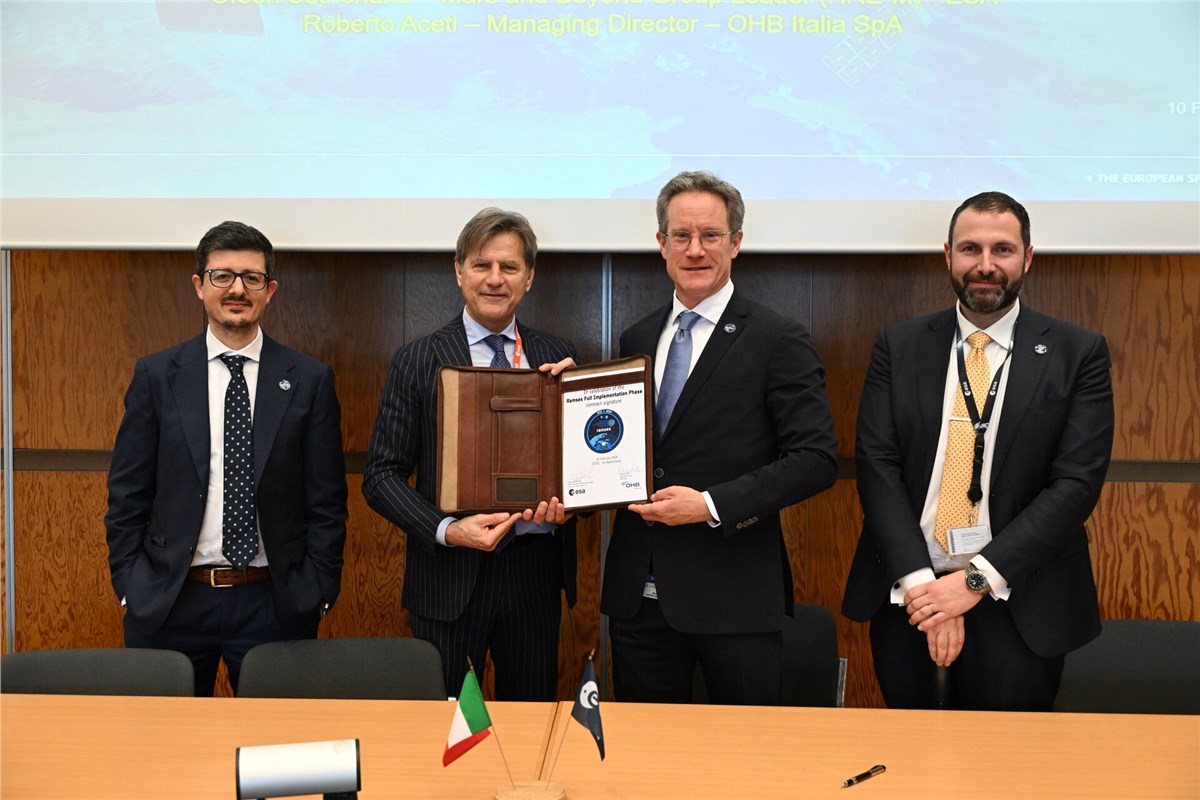
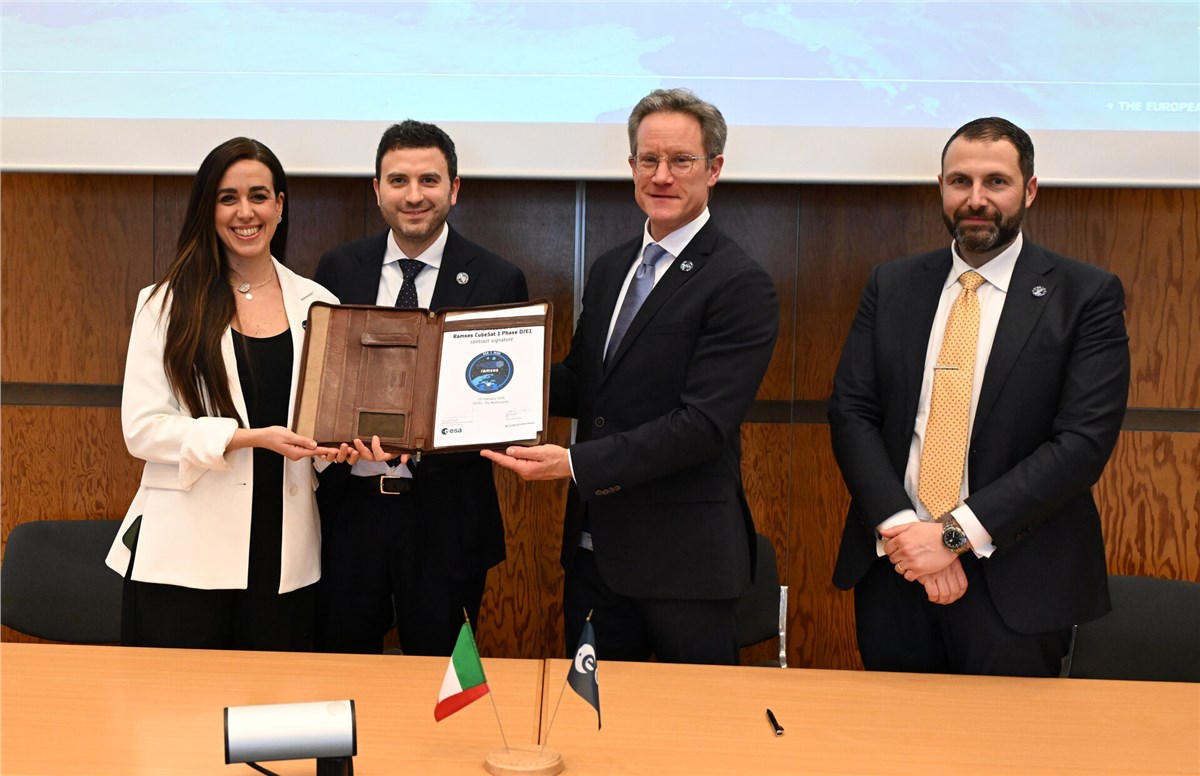

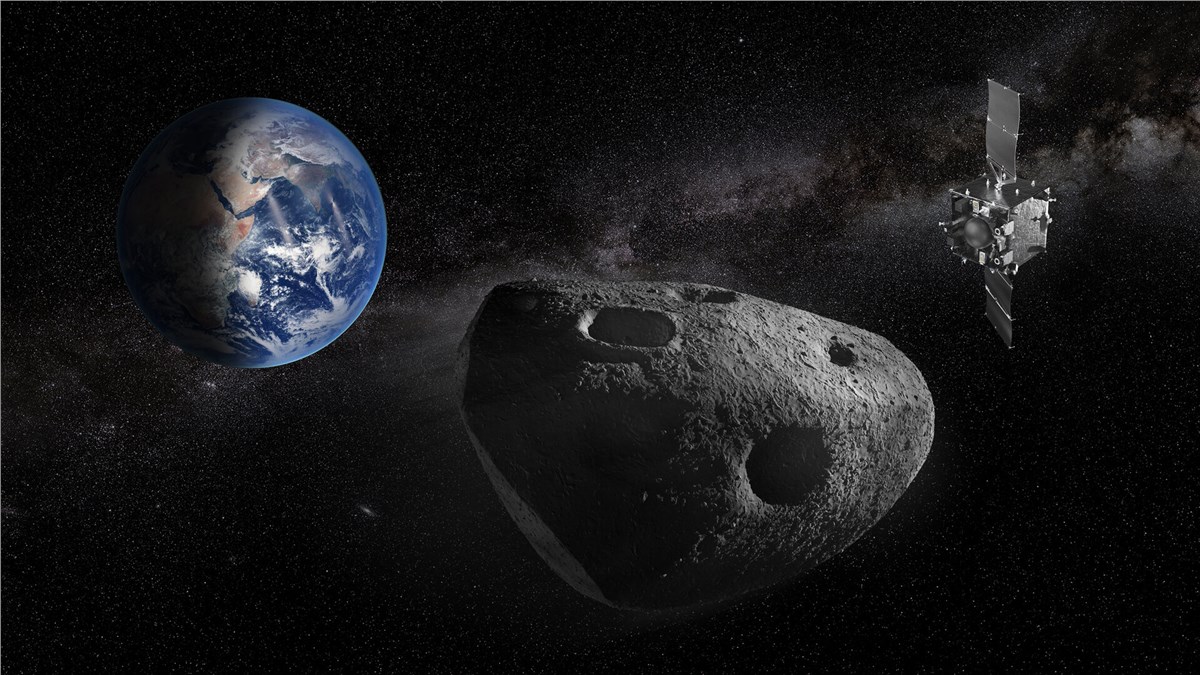
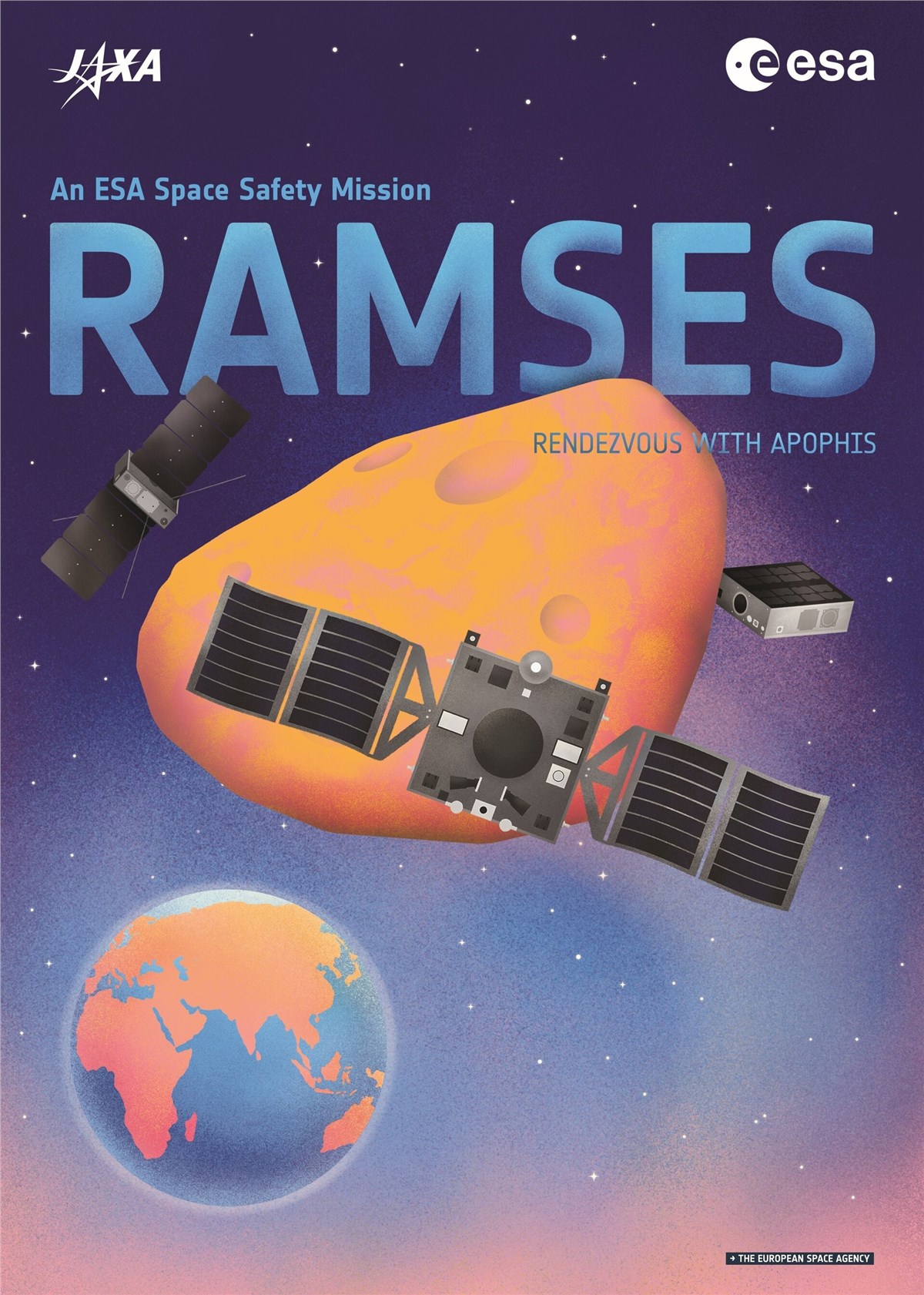
On 10 February 2026, the European Space Agency (ESA) signed a contract with OHB Italia for the development of the Rapid Apophis Mission for Space Safety (Ramses). Launching in 2028, Ramses will rendezvous with the asteroid Apophis before its rare close encounter with Earth. The mission will provide unique insight into the physical properties and behaviour of asteroids, and strengthen international collaboration and European capabilities in planetary defence.
The contract, worth €81.2 million, was signed today by ESA and OHB Italia at ESA’s ESTEC technology centre in the Netherlands and begins the spacecraft construction, assembly and testing phase of the Ramses mission.
This builds upon the contract signed in October 2024 to begin preparatory work on the mission and brings the total value to approximately €150 million.

Market forecast by Region, Type, Application, and End-User. Country Analysis, Market and Technology Overview including Critical Raw Materials, Opportunity Analysis, and Leading Company Profiles
Download free sample pages More information“With Ramses, ESA is seizing a once-in-a-lifetime opportunity to study asteroid Apophis as it swings past Earth, deepening our understanding of near-Earth objects and advancing our capabilities to protect our planet,” said Orson Sutherland, Mars & Beyond Projects Group Leader at ESA.
“The mission demonstrates European industry’s excellence and our commitment to international cooperation, while pushing the boundaries of robotic space exploration and inspiring people around the world.”
“We are proud to be entrusted by ESA with the Ramses mission,” said Roberto Aceti, CEO of OHB Italia.
“This contract reflects the confidence placed in our team’s expertise and decades-long heritage in delivering complex space systems. We look forward to working with ESA and our partners to deliver this truly ambitious mission for planetary defence.”
The Ramses team assembles
By bringing onboard OHB, the Ramses mission capitalises on the wealth of experience developed across Europe during the construction of ESA’s first planetary defence mission, Hera, which will arrive at the Didymos binary asteroid system later this year.
Like Hera, Ramses will carry two deployable CubeSats developed by European industry and designed to extend the mission’s scientific reach once it arrives at Apophis.
A second contract worth €8.2 million was signed today with Italy's Tyvak International for the construction of one of Ramses’ CubeSats, named Farinella after the Italian planetary scientist Paolo Farinella. As with the main Ramses spacecraft, this builds on an earlier contract worth €4.7 million awarded for preparatory work last year.
“We are excited to take on the challenge of delivering a small spacecraft that can make a big contribution to the study of the asteroid Apophis during its historic close Earth flyby,” said Fabio Nichele, CEO of Tyvak International.
“This mission highlights the strength of European industrial collaboration and underscores how innovative small satellites can play a key role in advancing planetary science and safeguarding our planet.”
The Ramses mission also brings in expertise from beyond Europe. Ramses is a joint mission by ESA and the Japan Aerospace Exploration Agency (JAXA).
JAXA’s contributions include spacecraft components such as the solar arrays and thermal infrared imager, and a potential rideshare launch with JAXA’s Destiny+ mission. Japanese researchers also participate in Ramses’ scientific activities.
A unique opportunity
Ramses will rendezvous with the near-Earth asteroid (99942) Apophis ahead of its incredibly rare and scientifically valuable flyby of Earth on 13 April 2029. The event will bring the roughly 375-metre object within about 32 000 km of our planet – less than one tenth the distance from Earth to the Moon.
Scientists around the world are eager to observe how the asteroid’s shape, spin and structure respond to Earth’s gravitational forces during this rare, but entirely safe, encounter. The insights gained from this natural experiment will enhance our understanding of how near-Earth objects behave under external forces.
This is critical knowledge for future planetary defence strategies against potentially hazardous asteroids. Ramses will thus contribute significantly to the core goal of ESA’s Space Safety Programme to protect Earth from natural and humanmade hazards originating in space.
Time to build
The Ramses Critical Design Review, conducted by ESA’s expert review board over the last few months, concluded on 6 February. It confirmed that the detailed design of the Ramses spacecraft meets all technical, scientific and programmatic requirements.
“Passing the Critical Design Review in record time gives us full confidence that Ramses’ design is mature, robust and ready to be built,” said Paolo Martino, Ramses mission manager.
“Successfully maintaining the mission’s accelerated pace is an endorsement of the team’s commitment and engineering vision under a very demanding schedule.”
With this critical milestone behind it, and the contract signed, the Ramses team will now focus on building, assembling and testing the flight spacecraft and its systems. Over the next year, hardware components such as the main spacecraft bus and payload instruments will be assembled and integrated.
This will be followed by rigorous environmental and functional tests to prepare the mission for its planned launch window in Spring 2028.