
By combining advanced simulation, flight testing, and AI-enabled systems, Aurora is shaping how aircraft learn, adapt, and operate safely in shared airspace.
Aurora Flight Sciences, a Boeing company, is shaping the future of flight by transforming advanced research into real-world autonomous flight systems. With decades of experience in autonomy, advanced aircraft design, and flight testing, Aurora is developing intelligent systems that will make aircraft safer, smarter, and more adaptable.
“Aurora has been advancing autonomous flight for over 35 years,” said Dr. Mia Stevens, chief engineer of the Accelerating Testing of Live Autonomy Software (ATLAS) program at Aurora. “What sets us apart is how we bring together research, flight testing, and real aircraft to make autonomy operational. We’re building systems that will define how the next generation of aircraft think and fly.”
Pioneering Autonomy with Optionally Piloted Innovation
Aurora has a long history of pioneering optionally piloted aircraft (OPA) as a bridge between traditional piloted flight and full autonomy. The company’s legacy in optionally piloted aircraft (OPA) began with Chiron, Aurora’s first OPA developed in 1996.
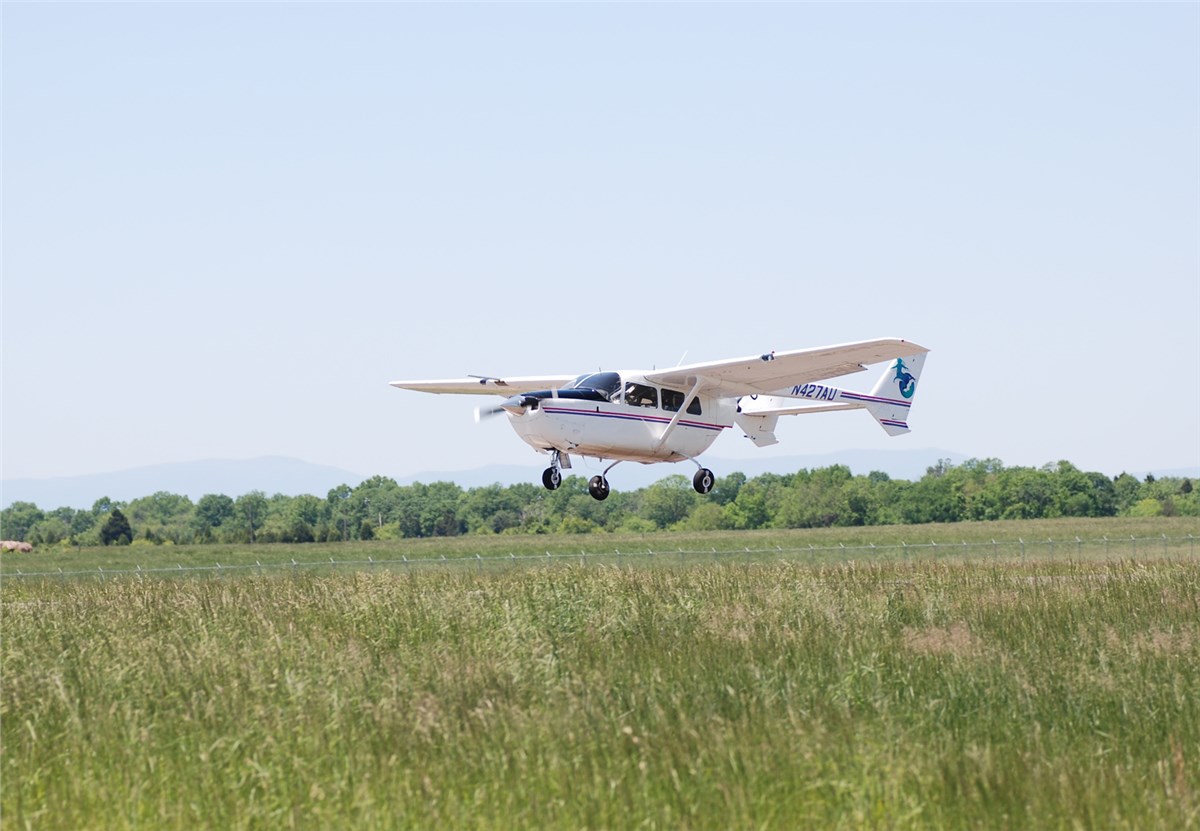
Building on that foundation, Aurora developed Centaur, a next-generation OPA that serves as a cornerstone for autonomy testing and data collection. With Centaur, flight test teams can conduct complex, repeatable flight tests in real-world conditions with or without an onboard safety pilot. It has become a key testbed for validating autonomy algorithms and advancing trust in human-machine collaboration.
Applying Autonomy Across Platforms
Aurora’s autonomy advancements are driven by deep technical expertise in Guidance, Navigation, and Control (GNC), perception capabilities, and early-stage research and technology development. These core capabilities enable Aurora’s systems to sense their surroundings, make decisions, and execute precise maneuvers. From perception algorithms that allow aircraft to identify landing zones and obstacles to GNC architectures that keep vehicles stable and mission-ready, Aurora’s integrated technical approach ensures autonomy is reliable from concept through flight.
These capabilities are applicable across a range of platforms, each contributing unique insights into how aircraft can operate independently and intelligently.
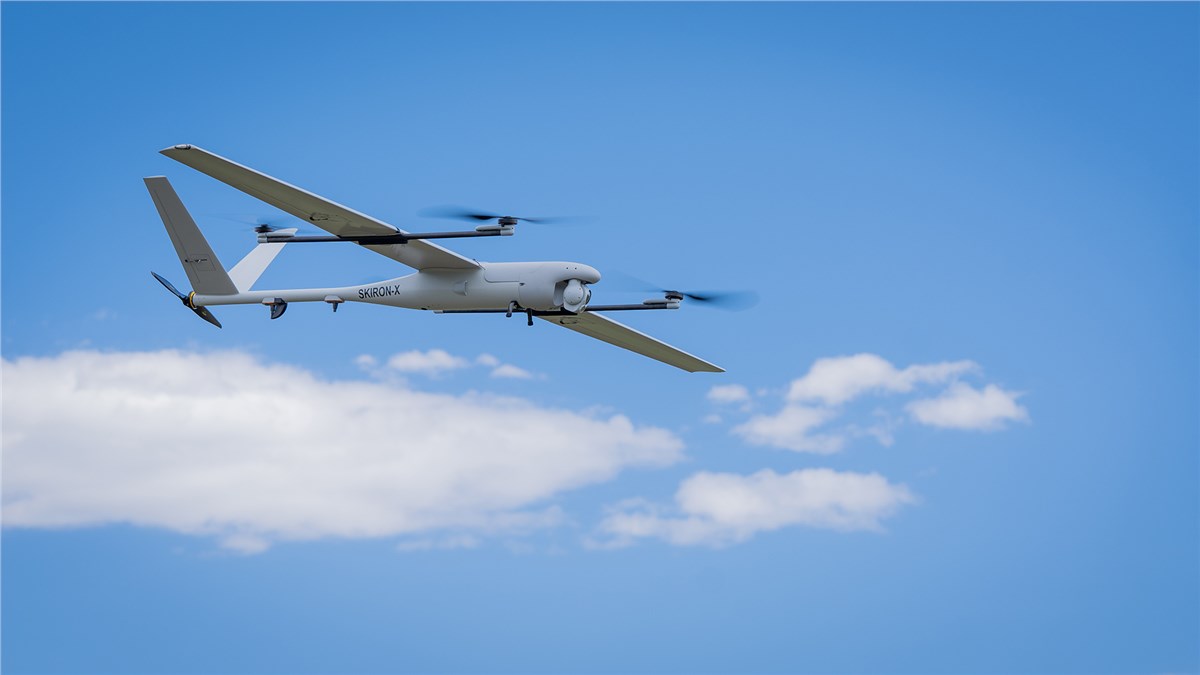
- SKIRON-X, a Group 2 sUAS, serves as a fast-moving test platform for autonomy software, perception systems, and decision-making algorithms. It enables rapid experimentation and iteration across missions and environments.
- Centaur demonstrates how autonomy can safely integrate into the National Airspace System (NAS), blending human oversight with automated systems in real flight scenarios.
- Aurora’s Autonomous Aerial Cargo Utility System (AACUS) demonstrated how a UH-1 helicopter could be transformed into an autonomous aircraft that completed takeoff, flight, landing site selection, and payload delivery all without human intervention.
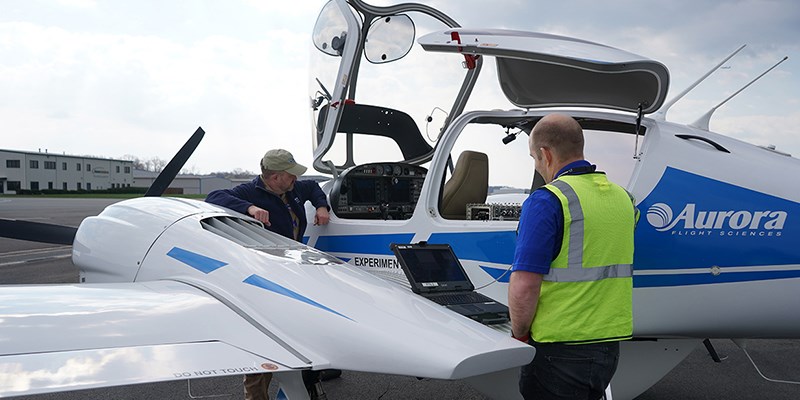
- Aurora’s work on experimental aircraft explores new aerodynamic designs, propulsion technologies, and flight-control architectures. Autonomous technology allows teams to reduce risk and increase repeatability when testing cutting-edge aircraft.
A Human-Centric Approach
At the heart of Aurora’s approach is a commitment to developing autonomy that can be trusted, meaning the technology performs predictably, learns continuously, and works hand-in-hand with human operators.
This process begins in the lab, where experienced pilots and autonomous systems operate together in simulated environments. Using tools like eye tracking and heart-rate monitoring, Aurora’s engineers study how pilots interact with automation, building systems designed to earn trust and improve decision-making in the cockpit.
New technology can then be tested in the company’s hardware-in-the-loop simulator, known as HILSim, which allows engineers to test autonomous capabilities with real aircraft hardware and software before a single flight ever takes place. HILSim bridges the gap between design and reality, providing a high-fidelity environment to evaluate system performance and safety under complex flight conditions.
During flight tests, operators on the ground oversee flights from one of the company’s remote operation centers. With Centaur, a safety pilot often rides along, ready to take over control of the aircraft if needed.
In many applications, autonomy augments rather than replaces human abilities. Pairing human oversight with autonomous decision-making allows for human judgement when needed and precise, efficient automation when it matters most. Autonomy adds an element of redundancy to increase safety, and the human-machine team can accomplish more complex missions, increasing the number, breadth, or duration of tasks that can be completed.